
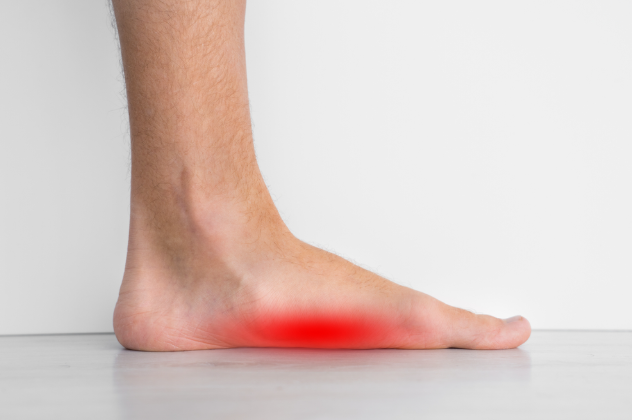
When the arches of your feet collapse or fail to provide proper support, your body’s alignment changes. Over time, these changes can place additional stress on your ankles, knees, hips, and lower back, leading to discomfort that may worsen during everyday activities.
If you’ve been experiencing persistent knee, hip, or back pain without a clear cause, your feet could be contributing to the problem. Keep reading to find out how flat feet affect your body’s movement and when to seek treatment before symptoms become more severe.
What Are Flat Feet?
Flat feet, also known as fallen arches, occur when the arches on the inside of the feet partially or completely collapse. Some people are born with flat feet, while others develop the condition gradually due to aging, injury, arthritis, or problems affecting the tendons that support the arch.
Although some individuals experience no symptoms, others develop ongoing discomfort and changes in the way they walk. Depending on the cause and severity, specialized treatment for flat feet may help improve foot function and reduce pain.
How Flat Feet Affect Your Body
Your feet serve as the foundation for your entire body. When the arches no longer absorb shock effectively, the joints above them must compensate for the change in movement and alignment. As a result, abnormal stress may travel from your feet through your legs and into your hips and lower back.
This altered body mechanics can gradually lead to pain, stiffness, muscle fatigue, and decreased mobility, especially during prolonged standing, walking, or exercise.
Can Flat Feet Cause Knee Pain?
Yes. Flat feet and knee pain are commonly connected because fallen arches often cause the legs to rotate inward while walking. This places extra pressure on the knee joint and surrounding soft tissues.
Common symptoms may include:
- Pain Around the Kneecap: Increased stress on the front of the knee during walking or climbing stairs.
- Joint Stiffness: Discomfort after sitting for long periods or first thing in the morning.
- Swelling: Mild inflammation caused by repetitive stress on the knee.
- Reduced Stability: Knees may feel weak or less supported during physical activity.
Can Flat Feet Cause Hip Pain?
Yes. Changes in foot alignment can also affect the hips. As your body compensates for fallen arches, the hips may rotate differently, increasing strain on the muscles, tendons, and joints. Over time, this altered movement pattern can place additional stress on the hip joints, particularly during walking, running, climbing stairs, or standing for extended periods.
Identifying the underlying cause of hip pain is important, especially when symptoms persist despite rest or other conservative measures. If your hip pain is related to flat feet, you may notice:
- Hip Discomfort: Pain that develops after prolonged walking, standing, or other weight-bearing activities.
- Muscle Tightness: Increased tension around the hips, glutes, or upper legs caused by altered movement patterns.
- Reduced Mobility: Difficulty moving comfortably during exercise or everyday activities.
- Uneven Weight Distribution: Additional stress placed on one hip due to changes in posture and gait.
Can Flat Feet Lead to Lower Back Pain?
Because the feet influence your body’s overall alignment, flat feet may contribute to lower back pain over time. When the ankles, knees, and hips become misaligned, the lower back often compensates, placing additional strain on muscles and supporting structures.
When your flat feet affect the strain placed on your lower back, you may notice these symptoms:
- Persistent Low Back Pain: Ongoing discomfort that worsens with standing or walking.
- Muscle Fatigue: Back muscles working harder to maintain balance and posture.
- Poor Posture: Changes in alignment caused by abnormal foot mechanics.
- Reduced Flexibility: Tightness that limits comfortable movement throughout the day.
Other Symptoms of Fallen Arches
Flat feet affect everyone differently. Some people only experience occasional discomfort, while others develop symptoms that interfere with everyday activities.
Common fallen arches symptoms include:
- Foot Pain: Aching or soreness in the arch, heel, or sole of the foot.
- Ankle Pain: Discomfort or swelling along the inside of the ankle.
- Heel Pain: Pain that becomes worse after standing or walking for extended periods.
- Foot Fatigue: Feet that tire easily during normal activities.
- Difficulty Walking: Changes in gait or balance caused by poor foot support.
- Swelling: Inflammation around the arch or ankle following activity.
Children can also develop flat feet. While many young children naturally have flat arches that improve as they grow, persistent symptoms or difficulty walking may benefit from evaluation by specialists experienced in pediatric orthopedic care.
How Are Flat Feet Treated?
Treatment depends on the cause of your flat feet, the severity of your symptoms, and how much the condition affects your daily activities. Many patients experience significant improvement with conservative treatment before surgery is considered.
Treatment options may include:
- Custom Orthotics: Shoe inserts that provide arch support and improve foot alignment.
- Supportive Footwear: Shoes designed to improve stability and reduce strain on the feet.
- Physical Therapy: Exercises that strengthen supporting muscles and improve flexibility.
- Bracing or Taping: Additional support to reduce stress on injured tendons and ligaments.
- Activity Modifications: Adjustments that help reduce repetitive stress on the feet.
- Surgical Treatment: Reserved for severe cases that do not improve with conservative care. Comprehensive foot and ankle care can help determine the most appropriate treatment for your condition.
Don’t Ignore Pain Caused by Flat Feet
Left untreated, fallen arches may contribute to ongoing knee, hip, and back pain while making everyday movement increasingly uncomfortable. Early evaluation can help identify the cause of your symptoms and prevent additional strain on your joints.
At One Oak Medical, our specialists provide personalized treatment plans designed to improve foot alignment, relieve pain, and restore comfortable movement. Schedule an appointment with One Oak Medical to receive a personalized evaluation and treatment plan tailored to your needs.