
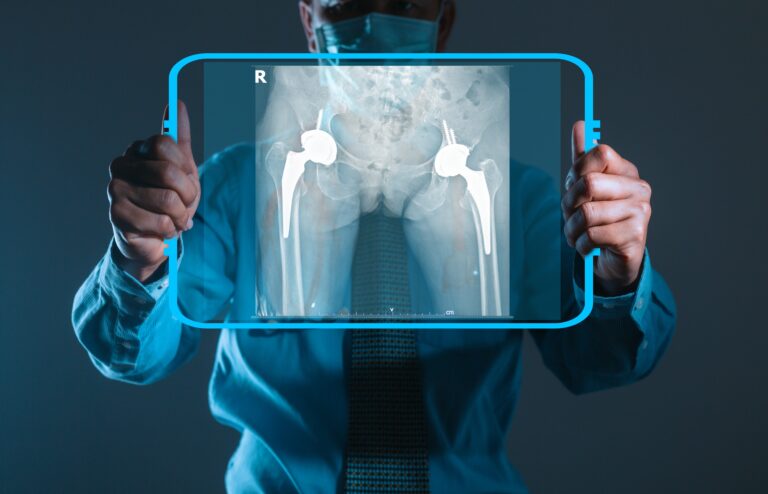
Chronic hip pain can make everyday activities, like walking, climbing stairs, or even getting out of bed, much more difficult than they should be. In many cases, this pain can be traced back to joint damage caused by arthritis, an injury, or long-term wear and tear on the hip joint.
When conservative treatments such as medication, physical therapy, or injections no longer provide relief, surgery may become the next step. Two options patients are often faced with are partial hip replacement and total hip replacement surgery. Understanding the difference between these procedures can help patients feel more confident and informed when making treatment decisions about their long-term joint health.
Let’s look at the differences between total vs. partial hip replacement now.
What Is Hip Replacement Surgery & Why Might It Become Necessary?
Hip replacement surgery is a procedure designed to relieve pain and restore movement in a damaged hip joint.
The hip is a ball-and-socket joint that allows smooth movement when walking, bending, standing, and rotating the leg. Over time, however, the joint can become worn down or damaged, causing inflammation, stiffness, and significant pain. At that point, orthopedic specialists may recommend hip replacement surgery to improve mobility and quality of life.
Several conditions can lead to the need for hip replacement surgery, including:
- Osteoarthritis: The most common reason for hip replacement, osteoarthritis causes cartilage to wear away over time, resulting in bone-on-bone friction and chronic pain.
- Rheumatoid Arthritis: This autoimmune condition causes inflammation within the joints that can eventually damage cartilage and surrounding tissues.
- Hip Fractures: Serious fractures, especially in older adults, may damage the hip joint beyond repair and require surgical replacement.
- Avascular Necrosis: This condition occurs when the blood supply to the hip bone is disrupted, leading to bone tissue death and joint collapse.
- Sports-Related Injuries: Repetitive stress or traumatic injuries from athletics can accelerate joint degeneration and cause long-term hip problems.
A Closer Look at Total Hip Replacement Surgery
Total hip replacement surgery, also known as total hip arthroplasty, is one of the most common and successful orthopedic procedures performed today. During this surgery, both the ball portion of the hip joint (the femoral head) and the socket portion (the acetabulum) are replaced with prosthetic components.
The Process of Total Hip Replacement
The damaged femoral head is removed and replaced with a metal or ceramic ball attached to a stem inserted into the thigh bone. The worn socket is resurfaced and fitted with an artificial liner that allows smooth movement between the new components. Together, these prosthetic parts recreate the natural motion of the hip joint while eliminating painful bone-on-bone contact.
The Best Candidates for Total Hip Replacement
Total hip replacement is often recommended for patients experiencing advanced joint damage that affects both sides of the hip joint. It is especially common among individuals with severe osteoarthritis, rheumatoid arthritis, or extensive degeneration caused by long-term wear and tear.
Patients who may benefit from total hip replacement surgery often experience:
- Persistent hip pain that interferes with daily activities.
- Difficulty walking or standing for extended periods.
- Reduced range of motion.
- Pain that continues even while resting.
- Limited improvement from non-surgical treatments.
The Benefits of Total Hip Replacement
One of the biggest benefits of total hip replacement surgery is long-term pain relief. Many patients experience dramatic improvements in comfort shortly after surgery, allowing them to move more freely and participate in activities they previously avoided. The procedure can also restore range of motion, improve stability, and help patients regain independence.
Total Hip Replacement Recovery
Recovery after total hip replacement varies from person to person, but most patients begin walking with assistance within a day or two after surgery. Physical therapy plays a major role in rehabilitation and helps strengthen muscles, improve flexibility, and restore mobility.
Many individuals can resume light activities within several weeks, although full recovery may take several months, depending on overall health and activity level.
What to Expect With Partial Hip Replacement Surgery
Partial hip replacement surgery, sometimes called hemiarthroplasty, is a procedure that replaces only the damaged femoral head while preserving the natural hip socket.
The Process of Partial Hip Replacement
During the procedure, the damaged ball portion of the hip joint is removed and replaced with a prosthetic implant that fits into the existing socket. Because only one part of the joint is replaced, the surgery is generally less extensive than a total hip replacement.
The Best Candidates for Partial Hip Replacement
Partial hip replacement is most commonly recommended for certain types of hip fractures, particularly in older adults whose socket cartilage remains healthy. It may also be considered in situations where damage is isolated primarily to the femoral head rather than the entire joint.
The Benefits of Partial Hip Replacement
This procedure can provide several benefits, including:
- Reduced surgical time
- Less disruption to the surrounding bone and tissue
- Faster initial recovery in some cases
- Pain relief and improved mobility
Partial Hip Replacement Recovery
Recovery following partial hip replacement typically involves physical therapy and rehabilitation similar to total hip replacement. Recovery timelines can vary depending on age, overall health, and the reason for surgery.
It’s important to note that partial hip replacement does have limitations. Because the natural socket remains in place, patients may still experience wear and tear within that portion of the joint over time. In some cases, ongoing degeneration may eventually require conversion to a total hip replacement later in life.
Total vs. Partial Hip Replacement: The Difference at a Glance
While both procedures are designed to relieve pain and improve mobility, there are several important differences between total and partial hip replacement surgery.
Extent of Joint Replacement
Total hip replacement involves replacing both the ball and socket portions of the hip joint, while partial hip replacement replaces only the femoral head.
Ideal Candidates
Total hip replacement is generally recommended for patients with widespread joint damage caused by arthritis or severe degeneration affecting the entire joint. Partial hip replacement is more commonly used for certain hip fractures or isolated damage limited to the femoral head.
Recovery Timelines
Both procedures require rehabilitation and physical therapy, but partial hip replacement may involve a slightly shorter initial recovery period due to the less extensive nature of the surgery.
Long-Term Durability
Total hip replacements are often considered more durable long-term because both joint surfaces are replaced. Partial hip replacements may eventually lead to wear within the natural socket, potentially requiring additional treatment later on.
Mobility & Function
Patients who undergo total hip replacement often experience substantial improvements in mobility and range of motion, especially when arthritis previously limited movement. Partial hip replacement can also restore function, particularly after fractures, though outcomes depend heavily on the health of the remaining socket.
Find Out Which Surgery Is Right for You
No two hip conditions are exactly alike, and factors such as age, activity level, lifestyle, overall health, and the extent of joint damage all play a role in determining whether total or partial hip replacement may be the better option. That is why personalized orthopedic care is so important when considering surgery.
If you’re in New Jersey and hip pain is limiting your mobility or interfering with daily life, turn to the specialists at One Oak Medical. We provide comprehensive evaluations and individualized treatment recommendations so that patients can get back to the lives they’ve built for themselves. Schedule a consultation today and discuss the pros and cons of hip replacement with our board-certified physicians.